

 By
By Japanese language has a unique way of condensing rich meanings into compact expressions, known as Yojijukugo.
What are Yojijukugo?
Yojijukugo (四字熟語) is a term from Japanese that refers to a specific type of idiom or expression consisting of four Chinese characters (kanji) grouped together, with a literal translation of 'four-character compound word.' These brief idioms, though concise, capture deep insights often rooted in historical or philosophical contexts.
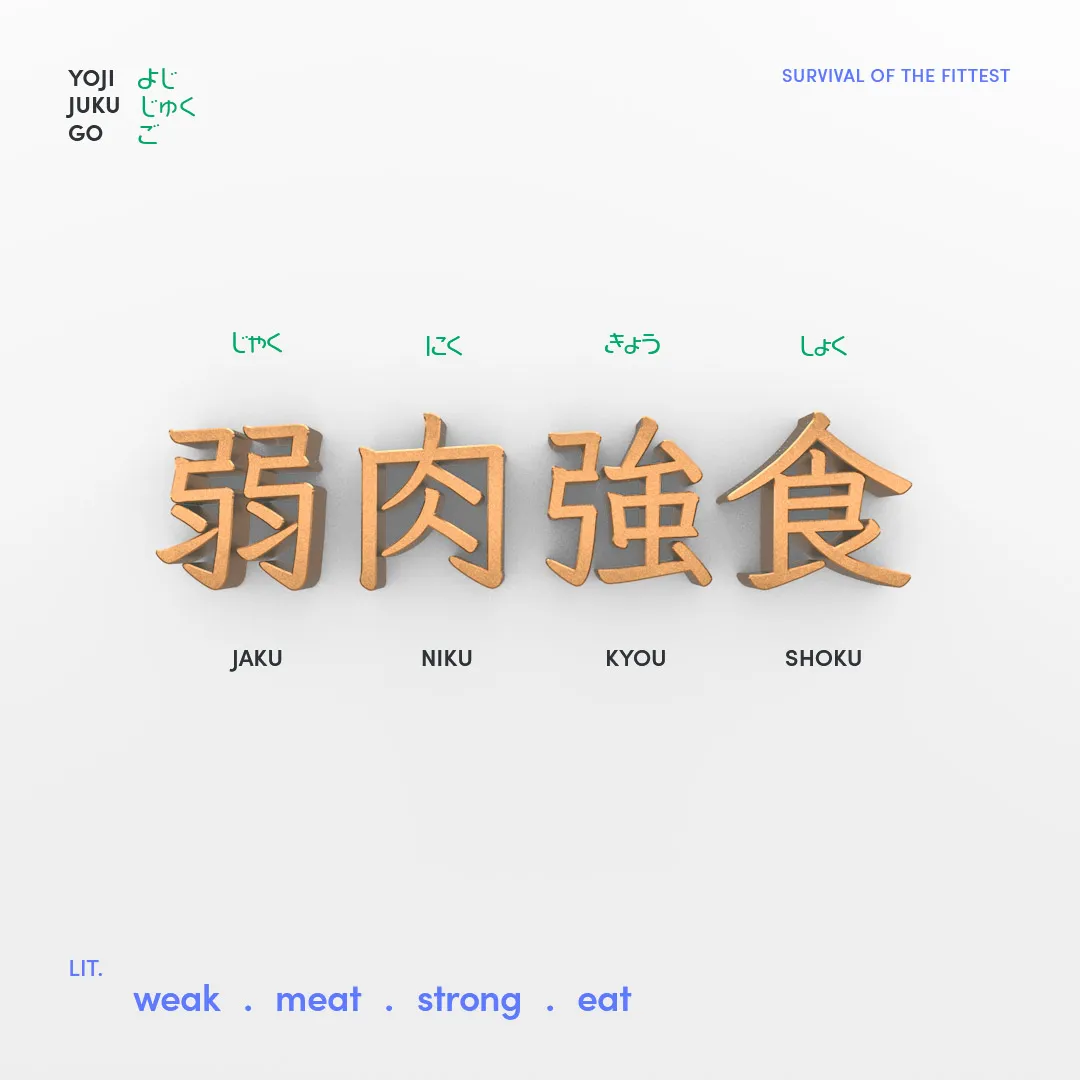
Take, for example, "弱肉強食" (Jaku Niku Kyō Shoku). It's made up of four characters: '弱' (weak), '肉' (meat), '強' (strong), and '食' (eat). Together, they represent the concept of 'survival of the fittest.'
This phrase represents nature's harsh competition, where the strongest thrive by preying on the weaker. It's also used as a metaphor for competitive situations in life, highlighting the importance of strength and adaptability.
Connecting Through Yojijukugo
These idioms are more than just linguistic constructs; they offer insights into the cultural and historical aspects of Japan. Through Yojijukugo, one can appreciate the efficiency and depth with which the Japanese language conveys complex ideas.
Online Resources
- JapanDict's List of Yojijukugo - Discover a variety of Yojijukugo, complete with meanings, readings, and explanations.
- Tofugu - A comprehensive guide to Japanese language and culture, including detailed articles on idioms.
- Jisho - A Japanese-English dictionary great for researching Yojijukugo and understanding kanji.